
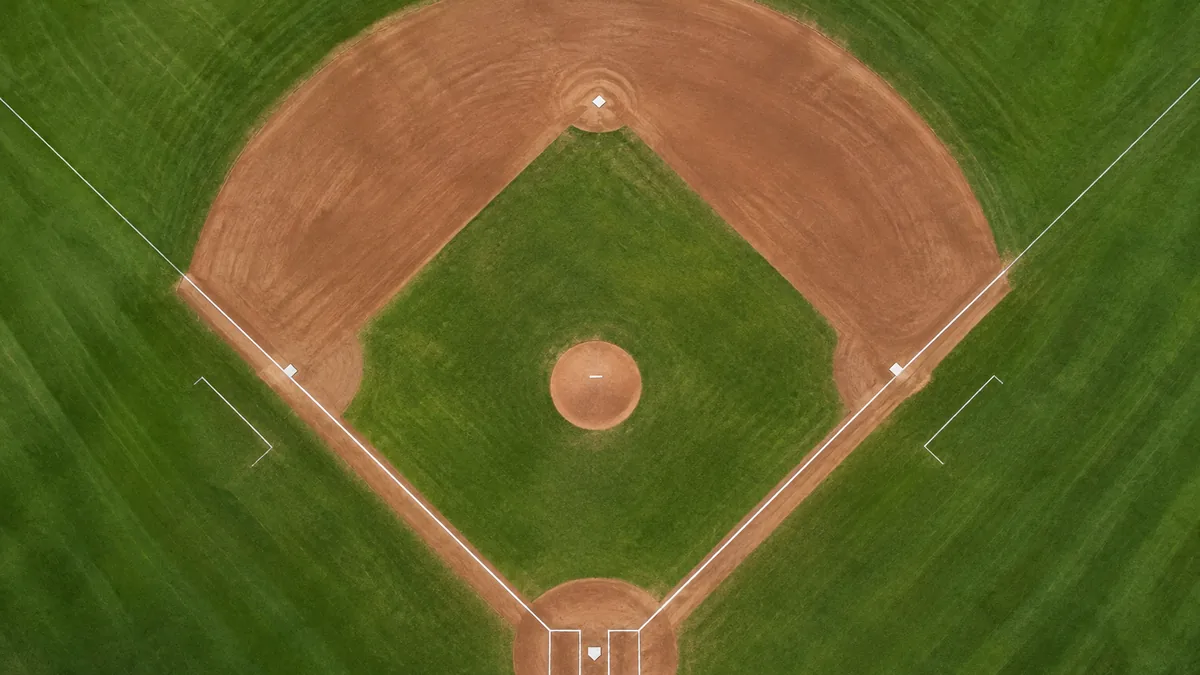
A baseball defense has nine players on the field at once, and each one has a specific job, a specific place to stand and a number. Watching a game becomes easier once you can match those jobs to the names. This guide starts at home plate and works outward through the battery, the infield and the outfield, then explains position numbers for scorekeeping and answers the usual "how many positions are there" question.
The short answer: nine fielding positions
The nine defensive positions are:
| Number | Position | Abbreviation | Area |
|---|---|---|---|
| 1 | Pitcher | P | Mound, center of the infield |
| 2 | Catcher | C | Behind home plate |
| 3 | First baseman | 1B | Near first base |
| 4 | Second baseman | 2B | Between first and second, on the right side |
| 5 | Third baseman | 3B | Near third base |
| 6 | Shortstop | SS | Between second and third |
| 7 | Left fielder | LF | Outfield, left side |
| 8 | Center fielder | CF | Outfield, middle |
| 9 | Right fielder | RF | Outfield, right side |
You may also hear about a tenth player, the designated hitter. We cover that below.
The battery: pitcher and catcher
Baseball people call the pitcher and catcher "the battery," because they work together on every pitch.
Pitcher (1)
The pitcher throws from the mound toward home plate, trying to get the batter out with strikes, weak contact and strikeouts. Pitchers are often divided into starters, who begin the game and throw many pitches, and relievers, who come in later. A pitcher also fields balls hit near the mound, covers first base on some plays and helps hold runners close to their bases.
Pitching requires arm strength, control and stamina, and it creates a lot of strain on the arm. Youth leagues limit the number of pitches a young player may throw for that reason, and they set age-based rules. Check your league for the details.
Catcher (2)
The catcher crouches behind home plate, receives each pitch and signals which pitch to throw. The catcher also blocks pitches in the dirt, tags runners trying to score, throws out runners who try to steal and directs the defense as the only player facing the whole field. Catchers wear extra protective gear and use a specially padded mitt. See our article on glove sizes for how catcher's mitts are measured.
The infield
The infield is the diamond between the bases. Four players cover it, and most plays involve a ground ball hit to one of them.
First baseman (3)
First basemen catch throws from the other infielders and tag the bag to record outs. They stretch to catch wide throws and scoop low ones, so they are often tall and use a long mitt. They also cover bunt plays and hold runners on first.
Second baseman (4)
The second baseman plays on the right side of second base, covering ground balls hit to that area. Second basemen turn double plays, receive throws from the shortstop and pivot to throw to first. Quick feet and a quick glove-to-hand transfer matter.
Third baseman (5)
Third basemen play at the "hot corner" because hard-hit balls reach them very quickly. They need a strong arm, since the throw to first base is long, and quick reactions to hard ground balls and bunts.
Shortstop (6)
The shortstop plays between second and third base and covers the largest area of the infield. Many teams place a strong, athletic defender here because many balls are hit in that direction and the position requires range, a strong arm and good instincts. The shortstop often acts as the infield's leader.
Together, the second baseman and shortstop are called the "middle infielders," and the first and third basemen are the "corner infielders." The position numbers 3, 4, 5 and 6 are the infield.
The outfield
The outfield is the grass area beyond the infield. Outfielders chase fly balls and line drives, field balls hit past the infield and throw to bases to hold runners or make plays.
Left fielder (7)
The left fielder covers the left side. Because many right-handed batters pull the ball, left fielders see plenty of action, though the throw to the plate or third is shorter than for other outfielders. The role can suit players with solid arms and sure hands.
Center fielder (8)
The center fielder covers the largest territory and is the outfield's captain. Center fielders usually need speed, a good first step and the ability to read the ball off the bat. They call off the left and right fielders on balls in between.
Right fielder (9)
The right fielder often has the strongest outfield arm, because the throw to third base is long. Right fielders field balls hit toward the right-field line and play near the foul pole.
What about the designated hitter?
The designated hitter, or DH, bats in place of the pitcher (or another fielder) and does not play defense. Because the DH takes a turn at bat but not a position on the field, he is not counted among the nine fielding positions. The DH has been used in different leagues at different times; to see how the rule developed, read Wikipedia: Designated hitter. Rules vary by league and level, so check your own competition.
So "how many positions in baseball?" has two honest answers: nine on defense, plus the DH as a batting role in leagues that use one. The question "are there 10 positions?" usually comes from this.
Other roles you will hear about
- Utility player. Someone who can play several positions.
- Pinch hitter. A substitute batter.
- Pinch runner. A substitute runner.
- Closer. A relief pitcher who finishes games.
- Middle relief. Pitchers who come in between the starter and the closer.
- Extra infielder / fourth outfielder. Bench players who cover multiple spots.
Those are roles, not extra positions on the field.
Position numbers and scorekeeping
The numbers in the table above are used to record plays in a scorebook. A ground ball to the shortstop who throws to first is written 6-3. A double play from shortstop to second to first is 6-4-3. A fly ball caught by the center fielder is F8. The system lets scorers write a play in a few characters. See Wikipedia: Scorekeeping for the full set of notations.
Where fielders stand
Positions are not fixed to a single spot. Fielders shift based on the batter, the count and the game situation. For example:
- With a runner on first and fewer than two outs, the infield may play at "double-play depth," closer to the base paths.
- With a runner on third and the game on the line, the infield may play in, ready to throw home.
- Against a power hitter, outfielders may play deeper.
- Against a bunt-minded batter, the first and third basemen may move closer to the plate.
The positions' names stay the same, but the exact standing places change every pitch.
Which position should a beginner try?
Coaches often rotate young players through every position so they learn the game. Some general ideas:
- A strong arm points to pitcher, shortstop, third base or right field.
- Quick feet and soft hands suit second base and shortstop.
- Height and a good target suit first base.
- Speed and good reading of fly balls suit center field.
- A calm, focused personality suits catcher.
Gear differs by position, especially for gloves. Read our glove sizing guide before you buy.
Positions by quick description
- Pitcher: starts every play.
- Catcher: receives pitches and runs the defense.
- First base: catches throws and holds runners.
- Second base: covers the right side and turns double plays.
- Third base: fields hard hits and makes long throws.
- Shortstop: covers the widest infield territory.
- Left field: outfield, left side.
- Center field: outfield leader.
- Right field: outfield, strong throw to third.
Sources
FAQ
What are the positions in baseball?
Pitcher, catcher, first baseman, second baseman, third baseman, shortstop, left fielder, center fielder and right fielder.
How many positions are in baseball?
Nine on defense. Many leagues also use a designated hitter who bats but does not play in the field.
What are the number positions in baseball?
1 is the pitcher, 2 the catcher, 3 first base, 4 second base, 5 third base, 6 shortstop, 7 left field, 8 center field and 9 right field.
What is the hardest position in baseball?
It depends on who you ask. Catcher and shortstop are often named, for different reasons: catchers for the physical and mental load, shortstops for the range and speed required.
Can a left-handed player play any position?
In practice, left-handers rarely play catcher, second base, shortstop or third base, because the throwing motion is awkward on those plays. They are common at pitcher, first base and the outfield.