
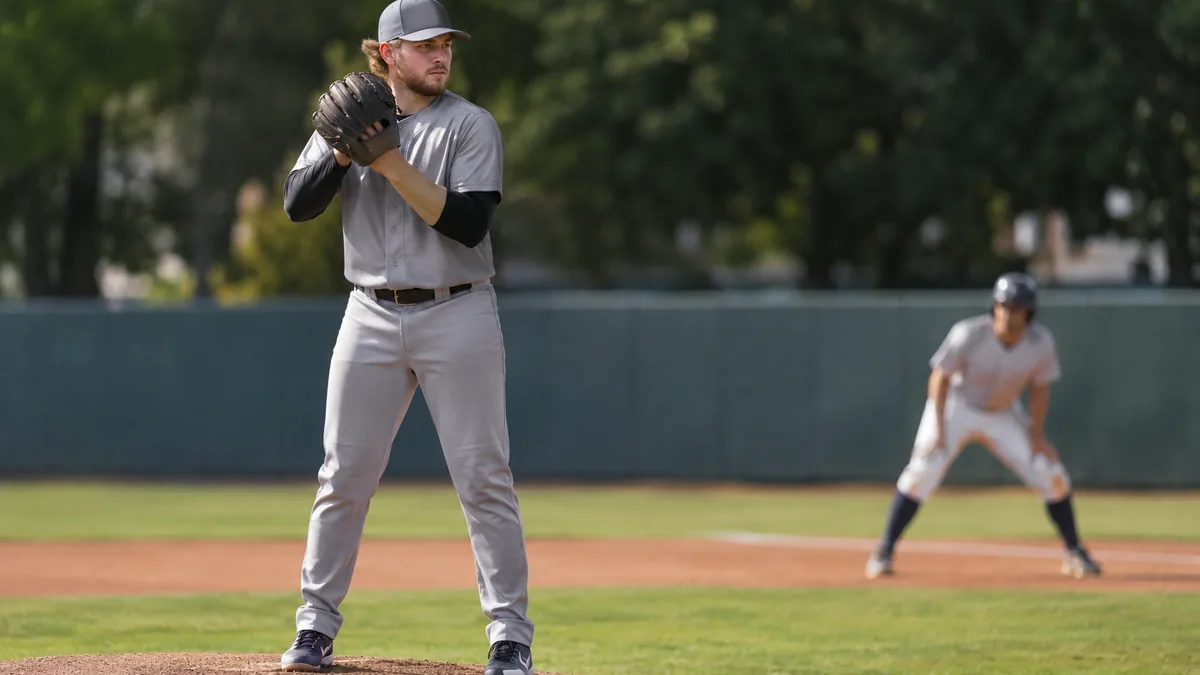
The balk is one of those baseball rules that even regular fans struggle to explain. An umpire stops the game, points at the pitcher, and every runner moves up a base. Nobody was thrown out, nobody hit the ball, and yet the play changes the inning. This guide explains what a balk is, why the rule exists and which pitcher actions most often draw the call, in plain language.
If you are new to baseball in general, our baseball terms glossary covers the words used below, such as "set position" and "rubber."
The idea behind the rule
A balk is an illegal action by the pitcher while at least one runner is on base. The rule exists to stop pitchers from deceiving runners in ways that are unfair. A pitcher is allowed to hold a runner close, to throw over to a base and to pick a runner off. What he cannot do is trick a runner by starting a pitching motion and then pretending not to, or by moving in a way that makes it impossible for the runner to know what is happening.
The simplest way to think about it: a runner leaning off first base needs to be able to trust the pitcher's motion. When the pitcher begins to pitch, he has to finish. When he is going to throw to a base, he has to do it in a legal way. When he breaks those expectations, it is a balk.
What happens when a balk is called
When an umpire calls a balk in the top levels of baseball, the ball becomes dead and each runner is awarded one base. That is true even if the runner had no intention of advancing. With the bases loaded, a balk therefore brings in a run. The batter stays at the plate with the same count.
There is an advantage rule, too. If a pitch is thrown after the illegal action and the batter reaches first base and every runner advances at least one base, the umpire generally lets the play stand and ignores the balk. The rule is meant to protect the offense, not to give a double benefit. The details are in the official rulebook, so check the exact wording of the version your league follows.
The penalty differs by level. Some youth leagues apply simplified balk rules or do not call balks at the youngest ages. Always check your league's rules.
The most common balk calls
Balks come in many forms. The following are the situations that most often lead to a call.
Starting the pitch and not finishing it
Once a pitcher begins the motion toward the plate, he must deliver the pitch. If he stops partway through, or flinches, it is a balk. This is the classic case that gives the rule its name: the pitcher "balks" at pitching.
Not coming set properly
From the set position, a pitcher is expected to come to a brief, complete stop before delivering the pitch when runners are on base. Failing to pause, or moving in a way that fakes the stop, can be called a balk. Umpires watch for a clear, visible moment of stillness.
Faking a throw in an illegal way
A pitcher may throw over to a base to try to catch a runner off guard, but the move has to follow the rules. In general, he has to step toward the base he is throwing to, or step off the rubber first, before making the throw or a fake. Pretending to throw to first base without stepping off is treated as a balk at the top level. The rules about feints to other bases differ in the details, so refer to the rulebook for the specifics.
Throwing to an unoccupied base
If a pitcher throws to a base with no runner and no play is possible, this can be called a balk. The rule is there to stop him from using a throw to a vacant base as a time-wasting trick. There are exceptions when he is trying to make a legitimate play.
Dropping the ball
If the pitcher accidentally drops the ball while on the rubber and in contact with it, the umpire can call a balk. It surprises many fans, because it looks like a simple fumble.
Quick pitching
A pitch thrown before the batter is ready, designed to catch him off guard, is called a quick pitch and is illegal. In some situations it can be called a balk.
Mixing up the windup and the set position
A pitcher uses either the windup or the set position, and each has its own rules about what he can and cannot do. Blending the two, for example starting from one and finishing with the movements of the other, can draw a balk.
"Balk on catcher" and other searches
People also search for "balk on catcher" and wonder whether a catcher can balk. Balks apply to pitchers. The catcher can be involved when the pitcher is distracted or when the catcher interferes, but those situations fall under other rules, such as catcher's interference or obstruction. If you see a balk call, it is the pitcher who made the illegal move.
A short example
Imagine a runner on first base and one out. The pitcher is in the set position, begins to bring his leg up as if to throw home, then stops and steps toward first. That is a balk, because he began the pitching motion and then changed his mind. The umpire calls "balk," the play is dead and the runner is awarded second base. The batter remains at the plate with the same count.
Tips for pitchers and fans
- Pitchers: practice your set position until the pause becomes automatic. Build a routine that looks the same every time.
- Coaches: teach young pitchers the basics of pickoff moves and how to step off the rubber properly.
- Fans: when a balk is called, watch the runners. They are all moving up one base, and at that moment the scoring changes, even though nothing happened on the field.
If you are curious about the roles around the pitcher, read about the positions in baseball or check the infield fly rule explained, another rule that confuses new fans.
For play in your own league, always follow the rulebook your league uses, because local rules and simplified youth versions can differ from the professional rules described here.
FAQ
What is a balk in baseball?
A balk is an illegal move by the pitcher while runners are on base, such as starting a pitch and not finishing it. The ball is dead and each runner advances one base.
What happens when a pitcher balks?
In professional baseball each runner is awarded one base. With the bases loaded this means a run scores. The batter stays at the plate with the same count.
What is the most common balk?
A common example is failing to come to a complete stop in the set position before pitching, along with starting the delivery and then stopping or flinching.
What does "balked" mean?
In baseball, "balked" means the umpire called a balk against the pitcher. In everyday English, to balk means to hesitate or refuse to continue, which is where the name comes from.
Can a catcher balk?
No. Balks are called against pitchers. Catchers can commit other violations, such as catcher's interference.