
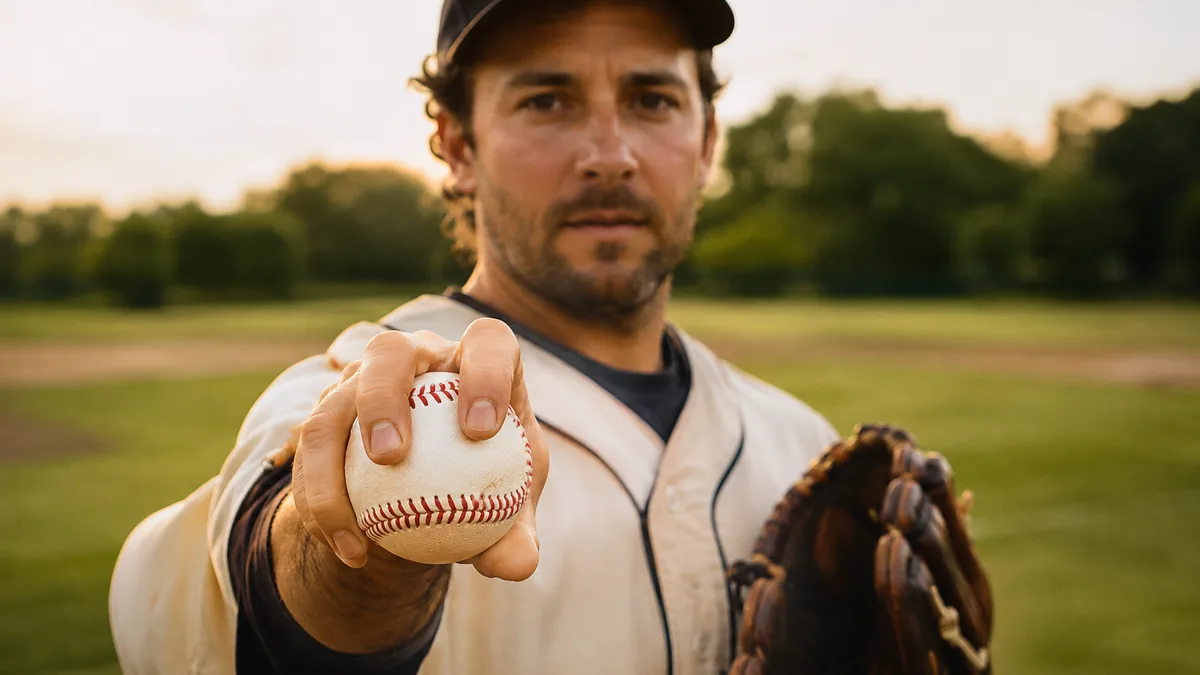
How a pitcher holds the ball decides how it spins, how it moves and how fast it leaves the hand. Grips look simple in a photo, but the details, such as where the fingers sit on the seams and how much pressure the thumb uses, matter more than most players expect. This guide walks through the main baseball pitch grips, explains the idea behind each one, and gives practical and safety advice for beginners and parents.
Grips are a starting point. Every hand is different, so treat these descriptions as a base to adapt with a coach. Baseball Europe is an independent guide, and your league's rules and your coach's advice always come first.
The basics of any grip
A few ideas apply to every pitch.
- Fingers on top, thumb underneath. For most pitches the index and middle fingers rest on top of the ball and the thumb supports it from below.
- Hold the ball in the fingers, not in the palm. Gripping deep in the palm slows the release and takes away feel and velocity.
- Relaxed pressure. A tight squeeze usually makes the arm stiff. Aim for a firm but loose hold, like holding a small bird.
- Seams matter. A baseball has raised red seams. Where your fingers sit on them changes the spin and the way air moves around the ball.
- Same arm speed. Whatever the grip, the delivery should look the same so batters cannot guess the pitch.
If you are new to the game, our baseball terms glossary explains words such as "release point," "spin" and "breaking ball."
The four-seam fastball grip
The four-seam fastball is the most common pitch in baseball and the usual first grip to learn.
How to hold it: Turn the ball so the seams form a horseshoe shape. Place the index and middle fingers across the seams at the widest part of the horseshoe, so that the fingers cross the seams. The thumb rests underneath, roughly below the gap between the two fingers, on the smooth leather or on a seam.
What it does: The ball leaves the fingers with backspin. Four seams rotate through the air in a way that gives the pitch its straight path and the highest speed of the common grips. It usually appears to drop less than other pitches.
Tip: Keep the fingers behind the ball at release and let them snap straight through, rather than twisting to the side.
The two-seam fastball grip
The two-seam fastball is a close relative.
How to hold it: Turn the ball so that the fingers run along the narrow part of the seams, where the two seams are closest together. The index and middle fingers lie along the seams, and the thumb sits underneath on the leather.
What it does: It is often a little slower than the four-seam and tends to run or sink slightly, depending on the pitcher's arm angle and finger pressure. Pitchers use it to get ground balls and to move the ball in on hitters.
The changeup grip
A changeup looks like a fastball but arrives more slowly, which messes up a hitter's timing. It is one of the most useful pitches for young players because it relies on grip and feel instead of extra stress on the arm.
Circle changeup: Make a circle with the thumb and index finger on the side of the ball, with the other fingers across the top and the ball pushed back toward the palm. The deeper hold takes speed off the ball while the delivery stays the same.
Three-finger changeup: Place the index, middle and ring fingers across the ball, with the thumb underneath. The extra finger and the lower hold also reduce speed.
What it does: The pitch should come out with the same arm speed as a fastball but with less velocity and a bit of fading action. The key is a fast arm. If the arm slows down, hitters will spot it.
The curveball grip
The curveball is a breaking pitch that moves downward and to one side because of topspin.
How to hold it: Place the middle finger along a seam, with the index finger next to it, and rest the thumb on the back seam underneath. Some pitchers hold the ball closer to the fingertips, and others put the index finger beside the ball for stability.
What it does: Instead of backspin, the pitcher snaps the fingers down the front of the ball at release to produce topspin. The ball drops more than a fastball.
Caution for young players: Many youth baseball organizations recommend that young pitchers avoid breaking pitches until they are physically mature, and instead focus on fastballs and changeups, because twisting the wrist and elbow can add stress. Follow your league's guidelines and your coach's or doctor's advice.
The slider grip
The slider is a faster breaking pitch than the curveball, and it moves sideways with a little downward action.
How to hold it: Hold the ball like a four-seam fastball, but shift the fingers slightly toward the side of the ball. The index and middle fingers sit a little off center, with pressure on the middle finger.
What it does: The pitcher throws it with fastball arm speed, and the ball spins on a tilted axis, so it breaks away from a same-handed batter. It requires a precise release, and it is an advanced pitch.
The cutter grip
The cutter is often described as a fastball with a late, small break.
How to hold it: Start with a four-seam fastball grip and move the fingers a little toward the side of the ball, with the thumb underneath. Pressure on the middle finger gives the ball a slight sideways spin.
What it does: It moves a few inches in the final feet before the plate, so batters who are timing a fastball hit the ball off the end of the bat.
The splitter grip
The splitter, also called a split-finger fastball, is thrown with a wide finger spread.
How to hold it: Spread the index and middle fingers on either side of the ball, along the seams, so that the ball sits deeper between the fingers. The thumb sits underneath.
What it does: Because of the wide spread, the ball leaves the hand with less spin and tends to drop sharply near the plate. It can be hard on the hand and the arm, so it is generally for advanced pitchers.
The knuckleball
The knuckleball is a rare pitch in which the ball is pushed rather than spun.
How to hold it: Press the fingertips or knuckles of the index and middle fingers into the ball, with the thumb underneath, and push the ball out with very little rotation.
What it does: Without much spin, the ball flutters and moves unpredictably. It is difficult to control and rarely used, so most players never need it.
Quick comparison of pitch grips
| Pitch | Basic grip idea | Typical movement |
|---|---|---|
| Four-seam fastball | Fingers across the seams of the horseshoe | Straight and fast |
| Two-seam fastball | Fingers along the seams | Slight run or sink |
| Changeup | Deeper in the hand, circle or three-finger | Slower, slight fade |
| Curveball | Middle finger on a seam, topspin | Drops downward |
| Slider | Fingers slightly off center | Sharp, sideways break |
| Cutter | Off-center fastball grip | Short late break |
| Splitter | Wide finger spread | Late drop |
| Knuckleball | Pushed with fingertips | Unpredictable flutter |
Safe practice for young pitchers
- Learn the fastball and changeup first. They build command and feel without extra strain.
- Warm up and stretch. Cold arms are more likely to hurt.
- Follow pitch counts and rest rules. Most youth leagues set limits on pitches per game and days of rest. Check yours.
- Stop if something hurts. Pain in the elbow or shoulder is a signal to rest and see a medical professional.
- Work with a coach. A coach can spot grip or arm-angle issues you cannot see yourself.
For general information about how the game works for beginners, our baseball rules for beginners guide is a good starting point, and our balk rule guide explains what pitchers must and must not do on the mound.
FAQ
How do you hold a baseball to throw a fastball?
Place the index and middle fingers across the seams on top of the ball and the thumb underneath. For the four-seam grip, the fingers cross the widest part of the horseshoe seams, and for the two-seam they lie along the narrow part.
What is the easiest pitch to learn?
The four-seam fastball is usually the first pitch taught, followed by the changeup. Both rely on a simple grip and good mechanics rather than a tricky wrist action.
What is the difference between a four-seam and a two-seam fastball?
The four-seam is typically faster and straighter because of its backspin. The two-seam is usually a bit slower and tends to run or sink, depending on the pitcher.
Should kids throw curveballs?
Many youth organizations advise young pitchers to wait on breaking balls until they are older and physically mature. Focus on fastballs and changeups, and follow your league's and your coach's guidance.
How tight should you grip a baseball?
Firmly enough to control the ball, but loosely enough that the wrist and fingers can move freely. A very tight squeeze can slow the arm and reduce velocity.