
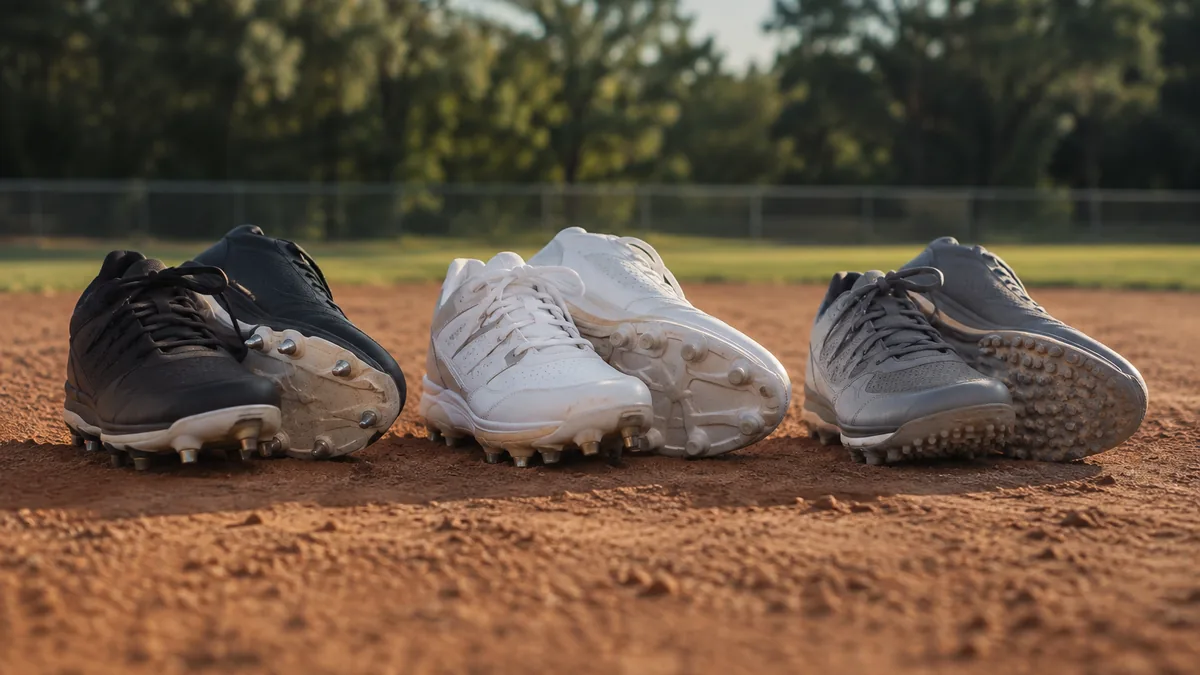
Baseball cleats look simple until you try to buy a pair. Search results show hundreds of models across metal, molded and turf styles, in low, mid and high cuts, for kids, teens and adults. The right pair depends on only a handful of decisions, and once you know them the choice narrows quickly. This guide walks through those decisions in order of importance: your league's rules, the surface you play on, your age and position, and fit.
Step 1: Check your league's rules first
Before comparing styles, check what your league allows. Many youth leagues restrict metal cleats at younger ages or in certain divisions, because metal spikes can injure other players in a slide or collision. Little League International publishes its playing rules, including equipment rules, at littleleague.org; confirm the current wording for your division there or ask your league's equipment officer. High school and college leagues have their own rules, and some adult recreational leagues ban metal on certain fields.
This is the step people skip, and it is the cheapest to get right. A pair of metal cleats is no use if the umpire will not let you wear them.
Step 2: Understand the three cleat types
Molded cleats
Molded cleats have studs built into the sole, usually from rubber or hard plastic. They are the standard starting point for youth players, and they are usually allowed where metal is not. Molded cleats are comfortable on both grass and dirt, last a long time and are forgiving on firmer ground. They give slightly less penetration into soft dirt than metal.
Best for: younger players, anyone in a league that restricts metal, players who also want a shoe for practice and casual use, wet or hard ground where metal can feel harsh.
Metal cleats
Metal cleats have thin steel or similar studs, either permanently attached or replaceable. They dig into grass and dirt for better traction, which helps with explosive starts, stealing bases and quick changes of direction. They are common among older high school, college and professional players and are allowed in many adult leagues.
Best for: older players in leagues that permit them, games on natural grass or dirt, players who want maximum grip when starting and stopping.
Watch out for: hard concrete-like infield dirt in summer, which can make metal feel jarring; walking on concrete or tile, which damages the studs and is slippery; league bans.
Turf shoes
Turf shoes have a rubber sole covered in small nubs instead of studs. They are made for artificial surfaces, and also useful for batting practice, bullpens, hard indoor facilities and casual play. They offer comfort and stability, and less aggressive grip than cleats.
Best for: artificial-turf fields, practice and training, players who want a lightweight second shoe, anyone who wants a sensible shoe for hard, dry dirt.
If you play on both grass and artificial turf, many players keep a pair of cleats and a pair of turf shoes and choose by field.
| Type | Traction | Typical use | Common rule issues |
|---|---|---|---|
| Molded | Good, forgiving | Youth, mixed surfaces | Rarely restricted |
| Metal | Strongest | Older and advanced players on grass and dirt | Often restricted at younger ages or by field |
| Turf | Moderate, stable | Artificial turf, practice, training | Rarely restricted |
Step 3: Choose the cut
Cut refers to how high the shoe comes up around the ankle.
- Low cut: the lightest and most mobile. Popular among infielders and outfielders who prioritize speed.
- Mid cut: a balance of mobility and support, a common default.
- High cut: the most ankle coverage and support. Less common today, but some players prefer it, particularly if they have had ankle injuries.
There is no evidence in the sources we reviewed that one cut universally prevents injury. Choose the one that feels secure to you and does not restrict your movement. If an athletic trainer or doctor has advised you about ankle support, follow that advice.
Step 4: Match the shoe to position and age
Pitchers push hard off the rubber and land on the stride foot. Look for a stable sole, enough toe room and a secure heel. Some pitchers prefer a shoe with a reinforced toe because of wear from dragging the back foot.
Catchers spend a lot of time crouching, so flexibility and comfort matter more than aggressive traction.
Infielders need quick lateral movement; a lightweight low or mid cut is common.
Outfielders need grip for sprinting and changing direction; metal cleats are a frequent choice at higher levels.
Children grow quickly. Choose a good-fitting molded cleat that is comfortable and durable rather than a premium model they will outgrow in one season. See our notes on fit below.
Step 5: Get the fit right
A cleat that does not fit will ruin a season with blisters, lost toenails or sore heels. Use this checklist.
- Shop in the afternoon or evening, when feet are slightly larger.
- Wear baseball socks, not thin dress socks.
- Leave about a thumb's width between the longest toe and the front of the shoe.
- Check the heel. It should not slip up and down as you walk or run.
- Walk and jog a few steps, and make a few quick turns if you can.
- Consider width. Many brands offer wide sizes, and some models run narrow. Read the specific size guidance for the model you buy.
- Do not buy a size too big for a child. Extra room encourages tripping and blisters.
Fit varies between brands even in the same size number. If you are ordering online, buy from a store with an easy return policy.
Step 6: Materials and construction
- Leather tends to mold to your foot and lasts a long time, and it needs more break-in.
- Synthetic uppers are lighter, easier to clean and usually cheaper, and they dry faster.
- Midsoles and insoles vary widely; cushioned insoles add comfort over a long game, but the thinnest insoles allow better ground feel.
- Toe protection helps pitchers and players who often drag their toes.
- Removable studs allow you to change the stud type or replace worn studs, where the league allows it.
Marketing language such as "speed," "power" or "control" does not tell you much. Compare weight, cut, stud type and fit, and ignore the rest.
Budget and durability
Cleats range from inexpensive youth pairs to premium adult models. We do not list prices in this guide, because they change often and differ by retailer. As a rule of thumb, for children spend modestly and replace as they grow, and for adults spend more on a model that fits well and is built for your surface.
Signs that a pair is worn out:
- Studs are rounded, cracked or missing.
- The sole is separating from the upper.
- The heel counter has collapsed.
- The insole has packed down and your feet ache.
Care tips
- Brush off dirt and let cleats air-dry. Avoid radiators.
- Stuff damp shoes with newspaper or a dry cloth.
- Do not walk on concrete or tile in metal cleats.
- Check the studs before each game, especially replaceable ones, for sharp edges or cracks.
Brands and models
You will see names such as Nike, New Balance, Adidas, Under Armour, Mizuno and others in every search. Each makes models across the full range of types. Rather than choosing a brand first, narrow by type, cut and fit, then compare two or three models from different brands in your size. A "best baseball cleats" ranking changes with each release season, so read recent reviews with an eye on the criteria that matter to you.
A quick buyer's checklist
- League rules checked, and metal allowed or not
- Surface identified: grass, dirt, artificial turf, indoor
- Type chosen: molded, metal or turf
- Cut chosen: low, mid or high
- Right size and width, tried with game socks
- Budget set, with growing kids in mind
Sources
- Cleat (shoe), Wikipedia for general background on stud types and surfaces.
- Little League playing rules for the youth equipment rules that apply to Little League divisions.
FAQ
What is the difference between metal and molded baseball cleats?
Metal cleats have thin metal studs that dig deeper for more traction. Molded cleats have rubber or plastic studs built into the sole, which are more forgiving and often allowed where metal is banned.
Are metal cleats allowed in youth baseball?
It depends on the league and division. Many leagues restrict them at younger ages. Check your league's rulebook before you buy.
Are turf shoes good for baseball?
Yes, on artificial turf and for practice, bullpens and training. They offer stability and comfort but less grip than cleats on natural grass and dirt.
How should baseball cleats fit?
About a thumb's width of room at the toe, a heel that does not slip and enough width that your foot is not squeezed. Try them with the socks you play in.
What are the best baseball cleats?
There is no single best pair. The best choice depends on your league rules, surface, age, position and foot shape. Narrow by type and fit, then compare current models.