
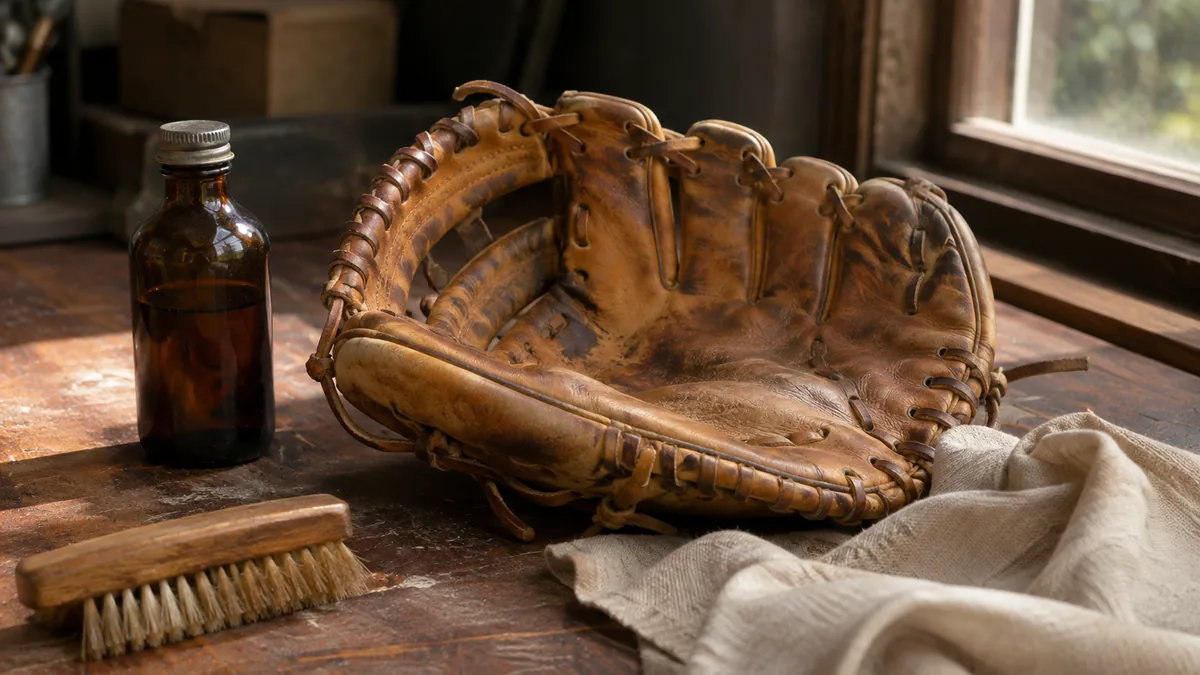
A baseball glove is leather, laces and padding, and all three age with use. Sweat, dirt, rain and sun slowly change how the glove feels. The good news is that a decent glove needs very little attention if you build a simple routine. The bad news is that most damage comes from doing too much: soaking, heating, or piling on oil.
This guide gives you a care routine you can follow in about ten minutes per month, explains when oil is actually useful, and shows how to deal with the two jobs people dread most, cleaning and relacing.
The short version
- Wipe the glove with a dry or slightly damp cloth after dirty games.
- Let it dry naturally, away from heaters and direct sun.
- Apply a thin layer of conditioner only when the leather looks or feels dry.
- Store it with a ball in the pocket in a cool, dry place.
- Replace or repair laces when they fray or when the web or fingers feel loose.
That is it. Everything below explains the reasons.
Do you need baseball glove oil?
Many players ask this, and the honest answer is "sometimes, and less than you think." New gloves arrive with leather that has already been treated at the factory. A hard-worked glove used in dry, hot or very cold conditions, or one stored for a long time, may lose some of its natural moisture. Leather that loses moisture becomes stiff, may darken unevenly and can crack at the fold lines.
Signs that conditioning might help:
- The leather looks pale or chalky.
- It feels hard or papery rather than supple.
- You see tiny cracks at the hinge or finger folds.
- The glove has been stored for months and feels stiff.
Signs you should not add more:
- The leather is dark, heavy or greasy.
- The glove feels floppy.
- You applied product within the last few weeks.
If you do apply a product, use one made for baseball gloves or sports leather. Put a tiny amount on a clean cloth, rub it into the palm, the hinge and the finger flex points, and wipe off any excess. One coat is enough. Let the glove sit for several hours before use.
Why oil can hurt
Over-oiling is the most common way people ruin gloves. Too much oil soaks into the leather and the padding, adds weight, softens the shape beyond recovery and can weaken the laces. A heavy, floppy glove will not hold a pocket. Some players also use household products such as cooking oil, petroleum jelly or shaving cream. They are not designed for leather that has to be both firm and flexible, and they can leave residues or go rancid. Stick with products made for the job, and apply sparingly.
For the first weeks of a new glove, you will usually do better with playing catch than with more product. See our guide to breaking in a baseball glove.
How to clean a baseball glove
Cleaning is mostly about removing dirt, dried sweat and, for older gloves, salt that can stiffen leather.
- Brush or wipe off loose dirt. A soft brush or dry cloth works well on the outside and in the finger seams.
- Dampen a cloth. Use lukewarm water, with a tiny amount of mild soap if the glove is greasy. The cloth should be damp, not dripping.
- Wipe the outside. Work in small circles. Do not scrub hard.
- Wipe the inside lightly. The lining and palm hold sweat. A slightly damp cloth is enough. Avoid soaking the lining.
- Dry the glove naturally. Leave it at room temperature, open and with air circulation. Stuff the fingers loosely with a clean cloth if you want to help them hold their shape.
- Condition only if needed. Wait until the glove is fully dry.
What to avoid: dishwashers and washing machines, harsh detergents, bleach, soaking in a bucket, hair dryers held close, radiators and direct hot sun. These methods strip natural oils, warp shape and shrink leather.
Dealing with smell
Sweat and moisture can leave a glove smelling musty. Airing it out in a shaded, ventilated place helps most of the time. Do not seal a damp glove in a plastic bag or a closed trunk, which encourages mold and odor. If the lining is badly stained, a damp cloth with a drop of mild soap, followed by thorough air-drying, is a better answer than a deep soak.
Storage that protects shape
How you store a glove matters as much as how you clean it.
- Keep a baseball or softball in the pocket and fold the glove around it. Secure with a band or a glove wrap.
- Choose a cool, dry shelf or bag. Avoid attics, garages and car trunks, which swing between very hot and very cold.
- Never leave a glove soaked. If it gets wet in the rain, stuff the pocket loosely, let it air-dry at room temperature, and then condition lightly if it feels stiff.
- Do not stack heavy gear on top of it, because that flattens the pocket.
- At the end of the season, wipe it down, let it dry, add a thin coat of conditioner if the leather is dry, and store it with a ball in the pocket.
How to relace a baseball glove
Laces hold the glove together. They stretch over time, and leather laces can dry out and snap. Relacing sounds hard, but a basic repair is manageable, and it lets you rescue a good glove instead of replacing it.
Signs you need new laces
- A lace is frayed, split or visibly thin.
- The web feels loose or the pocket has lost support.
- A finger seam is gaping.
- A lace has broken and the glove is coming apart.
Basic steps for a simple repair
- Photograph the glove. Take clear pictures from several angles before you remove any lace, or find a diagram for your glove model. The lacing pattern matters, especially in the web.
- Buy suitable lace. Glove lace is sold in rolls or precut lengths. Match the width and type to your glove, and check the size of the holes.
- Remove only the damaged section if possible. For a single broken lace, you can often thread a new piece through the same holes and tie it off inside.
- Thread the new lace with a lacing needle or a lace tool, following the original path. Use the photos as a guide.
- Pull firmly but evenly. Do not over-tighten, because tight lacing can pinch the leather and make the glove stiff.
- Tie off neatly where the original knot was, and tuck the ends where they will not rub your hand.
For a full web replacement or a heavily damaged glove, a sporting-goods shop or glove repair specialist can do the work, and the cost is often modest compared with replacing a premium glove. If it is an inexpensive youth glove with several damaged areas, replacement may be more sensible.
A simple yearly routine
| When | What to do |
|---|---|
| After wet or dirty games | Wipe and air-dry, away from heat |
| Monthly in season | Check laces, hinge and web; wipe down |
| When leather looks dry | One thin coat of glove conditioner |
| End of season | Clean, dry, light conditioner if needed, store with a ball |
| Start of season | Inspect laces, flex the leather, play easy catch first |
Common myths
- "Leather needs oil every month." It does not. Many gloves go a whole season with none.
- "More oil makes it better." It makes it heavier and floppier.
- "Water softens a glove for free." It softens it and can also warp it.
- "Old gloves are done." A quality glove can last many years with periodic care and new laces.
Sources
Leather is an organic material that responds to moisture and heat; see the general overview on Wikipedia: Leather and the design of the mitt in Wikipedia: Baseball glove. Always follow the care instructions from your glove's manufacturer where they differ from the general advice here.
FAQ
How do I clean a baseball glove?
Brush off dirt, wipe the outside and inside with a lightly damp cloth, and let the glove air-dry at room temperature. Avoid soaking, washing machines, and heat sources.
How often should I oil a baseball glove?
Only when the leather looks or feels dry, and then only a thin coat of a product made for baseball gloves. Many gloves need very little. Over-oiling makes a glove heavy and floppy.
Is glove oil necessary?
Not for every glove. New gloves are already treated, and playing catch breaks them in. Conditioner is a maintenance tool for dry or stored gloves, not a required step.
How do I relace a baseball glove?
Take photos of the original lacing, buy lace of the right width, thread the new lace through the same path, pull evenly and tie off where the old knot sat. For a full web, consider a repair shop.
Can I wash a baseball glove in the washing machine?
No. A washing machine strips oils, distorts the shape and can ruin the padding. Spot clean with a damp cloth instead.