
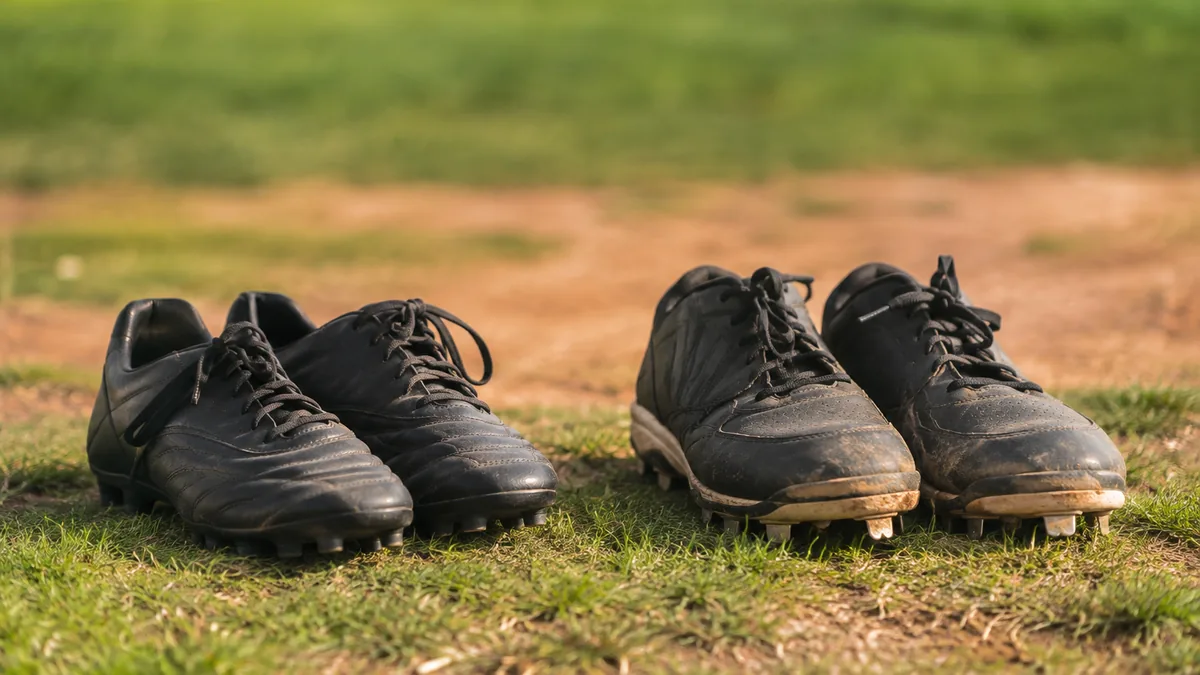
It is a common situation. A child plays two or three sports in a year, the family does not want to buy three pairs of cleats, and someone suggests using the football cleats at baseball practice. Or an adult plays in a casual league, finds an old pair of soccer boots in the garage and wonders whether they will do. The short answer is "sometimes, for casual play, with caveats." The longer answer depends on the sport, the stud type and your league's rules.
This guide gives a direct answer for each pairing, explains why the shoes differ, and tells you when to buy the right pair instead.
The quick answers
| Question | Short answer |
|---|---|
| Football cleats for baseball? | Often possible for casual play; check the league rules and the stud type |
| Soccer cleats for baseball? | Possible for casual play, but the fit and traction are not designed for baseball |
| Baseball cleats for football? | Not recommended in organized football; rules and ankle support differ |
| Baseball cleats for soccer? | Not recommended; some rules and safety concerns apply |
| Softball and baseball cleats? | Largely interchangeable, with a few rule and fit differences |
These are general guidelines drawn from how cleats are designed and regulated, not guarantees. The decision belongs to your league and its officials.
Why the sports use different shoes
Each sport asks different things from the foot.
- Baseball involves sprints in straight lines, hard stops at bases, pivoting in the infield, pushing off the pitching rubber and a lot of time on dirt. Cleats emphasize traction on grass and dirt and often a toe stud for the push-off.
- Football involves collisions, rapid direction changes and heavy contact. Football cleats generally prioritize ankle support, stability and a pattern of studs that suits multiple surfaces.
- Soccer requires constant running, close ball control and cutting. Soccer cleats tend to be lightweight and low cut with a stud pattern designed for ball feel and quick movements. Many soccer designs avoid a toe stud so the foot can strike the ball cleanly.
Those goals overlap, which is why the shoes look alike at a glance. They are not identical, though, and the differences are worth knowing. For a general description of stud types and how they vary by sport, see the Wikipedia entry on cleats.
Football cleats for baseball
This is the most searched version of the question. The practical issues are:
- Stud arrangement. Football cleats often carry a toe stud at the front, which can dig in. Whether that helps or hinders you at baseball depends on your style and the model. A toe stud can help when pushing off from a stance, but it can also catch on dirt or turf during a slide or a quick turn.
- Cut. Football cleats often come in high, mid or low cuts. A high cut gives ankle support but limits mobility for an infielder.
- Weight. Many football cleats are heavier than baseball cleats of the same size.
- League rules. Most youth baseball leagues care about stud material and whether the studs are metal, not the brand. If the cleats are molded and the league allows molded cleats, an umpire is unlikely to object. Some leagues restrict metal at younger ages; check your rulebook, for example Little League's playing rules for a Little League division.
If you are choosing between buying a new pair and borrowing, consider how many games the player will play. For a few practices or a short season, borrowing is fine. For a full year of regular games, a baseball-specific pair will usually be more comfortable.
Soccer cleats for baseball
Soccer cleats are lighter and usually lower cut. They can work for casual baseball because they provide good grip on grass. The potential problems:
- Fit and cut. Soccer boots are often snug through the midfoot for ball feel, and can be too tight or too narrow for some players in a long game.
- Lack of a toe stud. Many soccer designs omit it, which changes how you push off the rubber or dig in from a stance.
- Stud layout. Designed for quick cuts and kicking, not sliding or pitching. For a pitcher, the toe drag can wear the front of a soccer boot quickly.
- Metal studs. Some soccer shoes use metal or hard bladed studs. Check them against your league rules. Blades in particular are a safety concern and are banned or restricted in some leagues, so confirm before you play.
For a one-off game or an introduction to the sport, soccer cleats are an acceptable stopgap in many leagues. For a regular season, buy baseball cleats.
Baseball cleats for football
This direction is the one to avoid. In organized football, equipment rules and ankle support matter more. Baseball cleats with a toe stud can catch on turf during rapid cuts, and baseball cleats generally offer less lateral and ankle support than football-specific designs. Football coaches and leagues often have rules on cleats, and a referee or coach can tell you what is permitted. For casual backyard play, any cleats may be fine, but do not treat baseball cleats as a replacement in organized contact football.
Baseball cleats for soccer
The same principle applies. Baseball cleats may have a toe stud that interferes with striking the ball cleanly or that raises safety concerns in a tackle. Many soccer leagues check cleats before games, and some forbid certain stud types. Use soccer-specific boots for soccer.
Softball and baseball cleats
Softball and baseball cleats are very similar. Many models are sold for both sports, particularly turf shoes and molded cleats. The difference is mostly in sizing and in rules about metal cleats at various age levels. If a model is marketed for softball, it will normally work for baseball and vice versa, but always check fit and league rules.
How to decide in four steps
- Check the league rules. If metal is banned and the borrowed pair has metal, stop there. If the rules are silent, ask the league officials.
- Check the studs. Look for cracks, sharp edges and bladed shapes that could injure other players.
- Check the fit. A shoe that is too tight, too loose or too heavy will hurt after an hour.
- Consider the frequency. One weekend tournament is a very different case from a spring season.
When to buy a dedicated pair
Buy baseball cleats if:
- You or your child will play regularly in a league.
- You need metal cleats for an older age group.
- You pitch or catch, where wear and movement patterns put unusual stress on the shoe.
- The borrowed pair does not fit well.
- Your league has specific requirements.
For tips on picking the right type of baseball shoe, read our guide to how to choose baseball cleats.
Money-saving ideas that actually work
- Buy used from a local team swap. Children outgrow cleats long before they wear them out.
- Look for an end-of-season sale from a sporting goods store.
- Choose a turf shoe or molded cleat that works across baseball and softball.
- Buy one size up only if the fit allows it; never so large that the heel slips.
- Pass down a pair when siblings are close in size and the shoes are still in good shape.
Safety first
Studs are designed to grip the ground, and in a slide or a collision they can hurt another player. Whatever you wear:
- Make sure studs are intact and not worn to a sharp edge.
- Never wear metal studs where the league bans them.
- Replace cleats with split soles or a collapsed heel.
- Do not walk on pavement in metal cleats; the studs wear down and you can slip.
If a coach, umpire or league official tells you a pair is not allowed, accept the call and switch.
Sources
- Cleat (shoe), Wikipedia for general information on cleat designs by sport.
- Little League playing rules for youth equipment rules; your own league's rulebook takes priority.
FAQ
Can you use football cleats for baseball?
For casual play, often yes, provided the studs are allowed by your league and the fit is comfortable. For a full season, baseball cleats are usually the better choice.
Can you use soccer cleats for baseball?
They can work as a stopgap on grass. They are lighter and often lack a toe stud, so traction and durability differ. Check for metal or bladed studs against your league's rules.
Are baseball and football cleats the same?
No. They look similar, but football cleats usually favor ankle support and stability for contact, while baseball cleats focus on traction for running, pivoting and pitching.
Can you wear baseball cleats for football?
Not recommended in organized football. Baseball cleats generally lack football-specific support and may have stud patterns that conflict with football rules.
Are softball and baseball cleats the same?
Largely, yes. Many models are made for both. Check fit and your league's rules on metal cleats.